
FSSAI License Guide for Third-Party & Contract Manufacturing (2026)
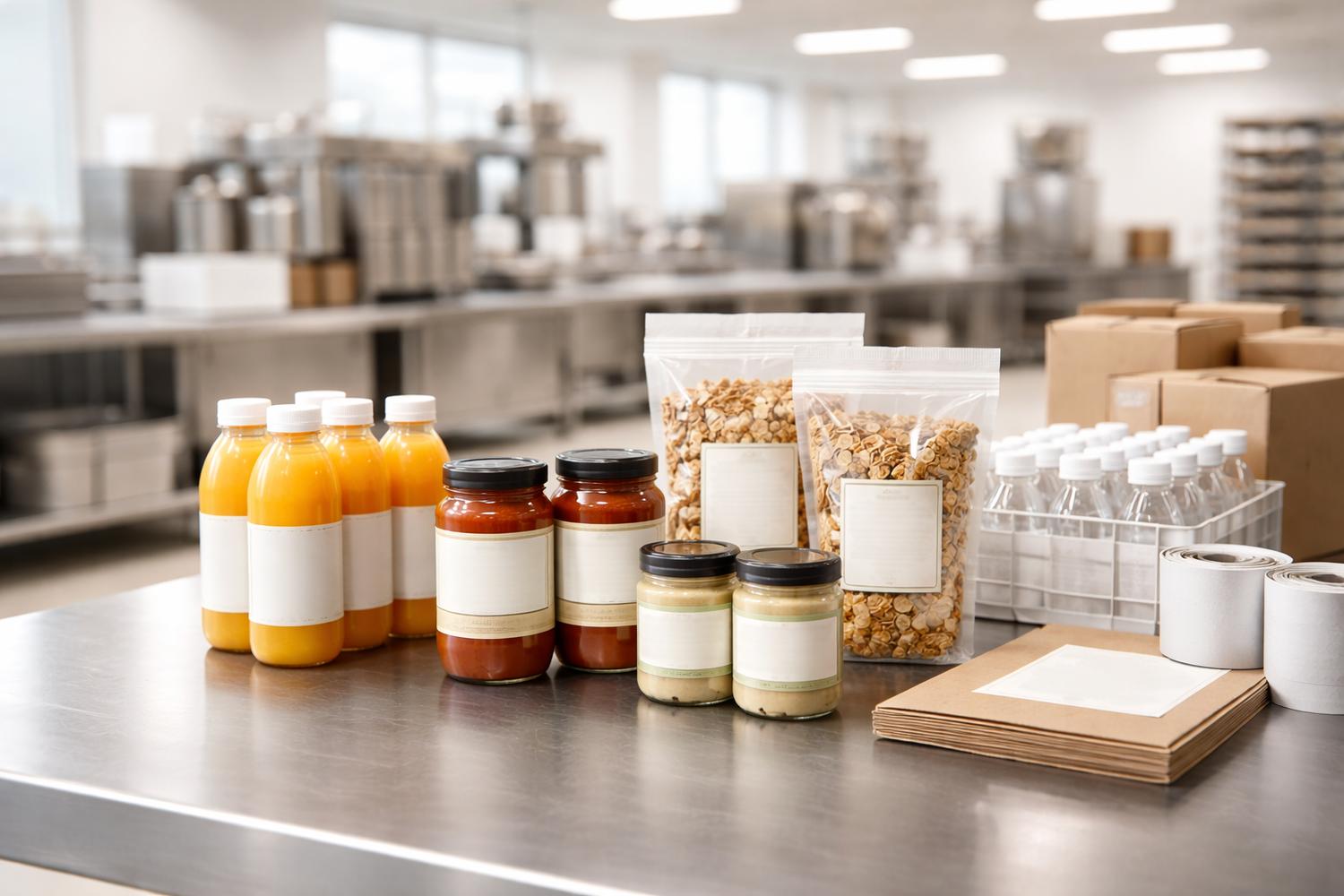
Here's what most food founders discover too late: outsourcing manufacturing does not mean outsourcing regulatory responsibility. The moment your brand name appears on a package, the FSSAI sees you as the responsible party.
Who Needs the FSSAI License?
Both the manufacturer and the brand need licenses but they're different.The manufacturer's license covers their facility: equipment, processes, hygiene, water quality, waste. It's proof they can produce safe food.
The brand owner's license depends on what you're actually doing. This is where most brands get confused.
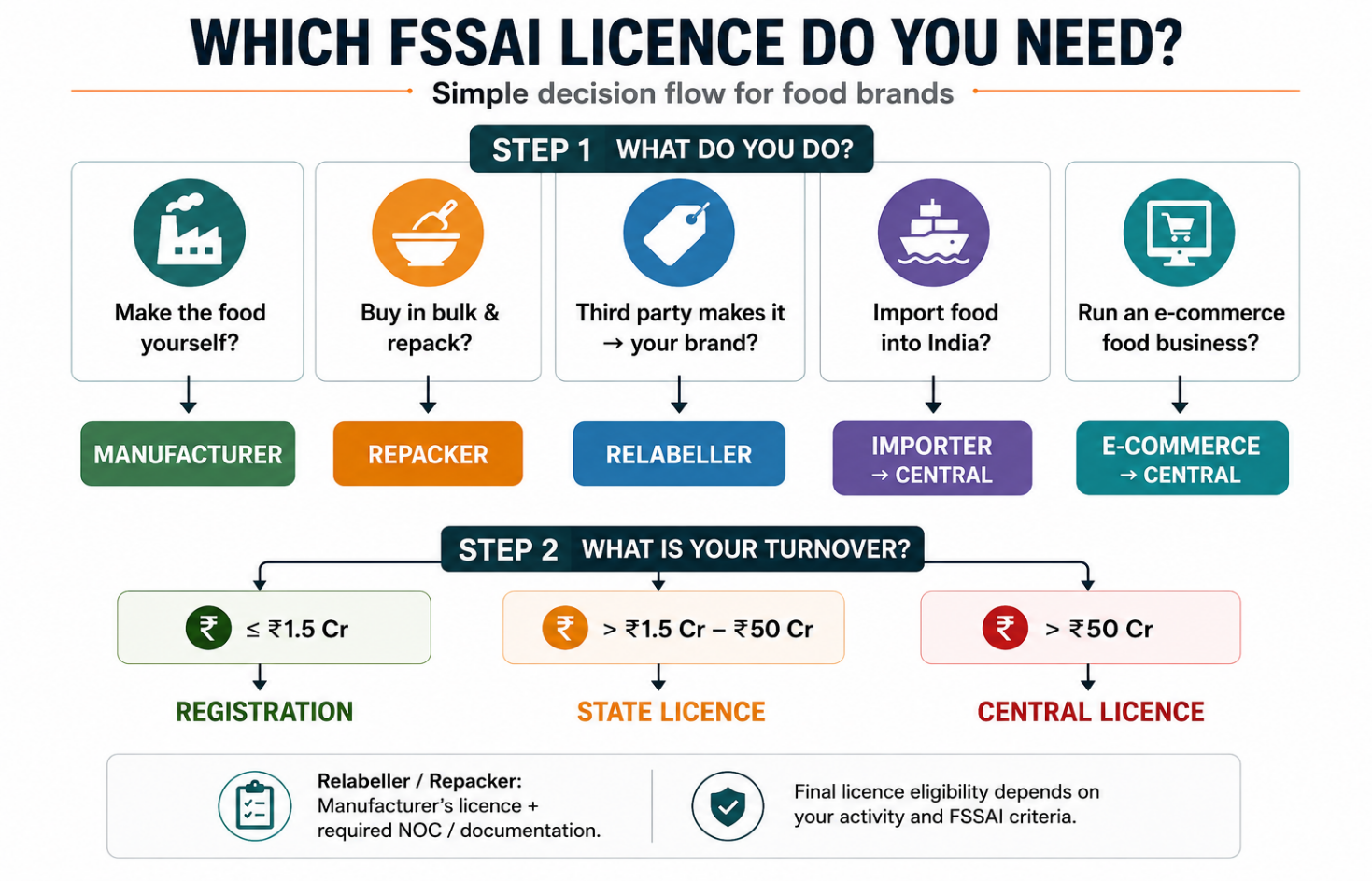
License Categories: Know Yours
1. Manufacturer License
You make or process food (reformulate, blend, grind, fortify, preserve)
Example: You source raw ingredients, grind them into flour, package and label
Scope: Responsible for the product inside the pack: ingredients, processing, safety
Requirement: Your facility must be inspected and approved by FSSAI
2. Repacker License
You take finished, bulk food and repackage it into retail units with new labeling
Example: Buy atta in 25kg containers, repack into 1kg retail bags with your label
The food itself is untouched; you're only changing the packaging
Scope: Responsible for the label, packaging integrity, and shelf life after repackaging
Requirement: Your facility needs basic infrastructure for repackaging (storage, labeling, hygiene)
3. Relabeller License
You take finished, sealed, pre-labeled food and apply a new label
Example: Contract manufacturer does your manufacturing and packaging with your label
The food is already in retail packaging; you're just changing the brand label
Scope: Responsible for the accuracy of the new label (ingredients, allergens, license number, etc.)
Requirement: Minimal. Often just registration, no facility inspection needed
4. Trader/Distributor License
You buy finished food and sell it as-is without repackaging or relabeling
Example: Stock retail products in your shop or on your e-commerce platform, sell under the original brand
Scope: You're just a middleman; not responsible for the product or label
Requirement: Registration only; no facility inspection
5. Importer License
You import food from outside India and bring it into the Indian market
You need this even if you're just importing pre-packaged, branded products
Scope: Responsible for ensuring imported products meet FSSAI standards
Requirement: Registration + periodic testing of imported batches
Common Mistakes
If your brand name goes on the pack in any form, you need a license. The exact type depends on what you're doing to the product.
"I'm just a trader distributing someone else's product" → If you're calling it "your brand" or your label appears anywhere, you're not a trader. You need a relabeller or repacker license.
"The manufacturer has a license, so we're good" → The manufacturer's license covers their facility and process. Your license covers your legal accountability for that product in the market. Two different things.
"We're importing pre-packaged food, so it's already compliant" → You still need an importer license and you're still liable for that product's compliance in India.
"We're just relabeling, so we don't need a facility inspection" → Relabellers still need a license. The inspection is lighter, but you need to register and maintain documentation.
"We're small, so Registration is enough" → Even a micro business selling nationally through e-commerce needs a Central license.
"Confusing license type with license level "→ A relabeller can hold a Central, State, or Registration license depending on scale. Type and level are independent choices
Who Is Responsible for the Label?
Everything on that label is your liability as a brand owner: ingredient declaration, allergen warnings, nutrition facts, health claims, barcode, manufacturing/expiry dates.
FSSAI auditors cross-check labels against test reports, regulations, and actual sourcing. A manufacturer's clean license doesn't shield you from label violations.
Who Tests the Product?
Brand owner ,Via an independent NABL-accredited lab. It gives you an independent verification trail.
If FSSAI questions your product, you can show testing from an accredited lab, not just the manufacturer's report.
What Documents You Must
Non-negotiable. Verify each one before you sign anything:
| Document | What it covers | Note |
|---|---|---|
| FSSAI license | The manufacturer's legal right to produce food | Verify on the FOSCOS website yourself |
| Signed manufacturing agreement | Roles, testing, liability, recall procedures | Your primary audit trail |
| Product testing reports | Independent NABL-lab results | Keep 2+ years |
| Ingredient supplier certificates | Certificates of analysis for each ingredient | Traces back to source |
| Recall procedure | Written steps, owners, timelines | Must be in writing, not verbal |
| Product liability insurance details | Coverage in case of contamination or recall | Confirm who is named on the policy |
Your Pre-Launch Compliance Checklist
You've chosen your manufacturer. You've signed an agreement. Now before you launch , here's what needs to be in place.
1. Licensing & Documentation (2-3 weeks before launch)
2. Product Testing (4-6 weeks before launch)
3. Label Compliance (3-4 weeks before printing)
The Bottom Line
Your brand name is on that package. Make sure every decision from the factory to the label to the way you retain samples for traceability backs that promise.
A regulatory expert can review your setup, your agreement, and your label before you print a single unit.
Talk to our regulatory expertComments
No comments yet. Be the first to share your thoughts.
Add your thoughts
Contact usPrefer a call with our team? Use Contact us, or leave your email below if you want us to follow up on this comment.