
FSSAI FOPL 2026: What the Proposed Red Warning Labels Mean for Food Businesses
FSSAI Front-of-Pack Warning Labels 2026: Red Warning Labels, Proposed Thresholds & What Food Businesses Need to Know
Regulatory status: PROPOSED, not yet a final compliance requirement
FSSAI has proposed a new Front-of-Pack Labelling (FOPL) system for certain pre-packaged foods in India.
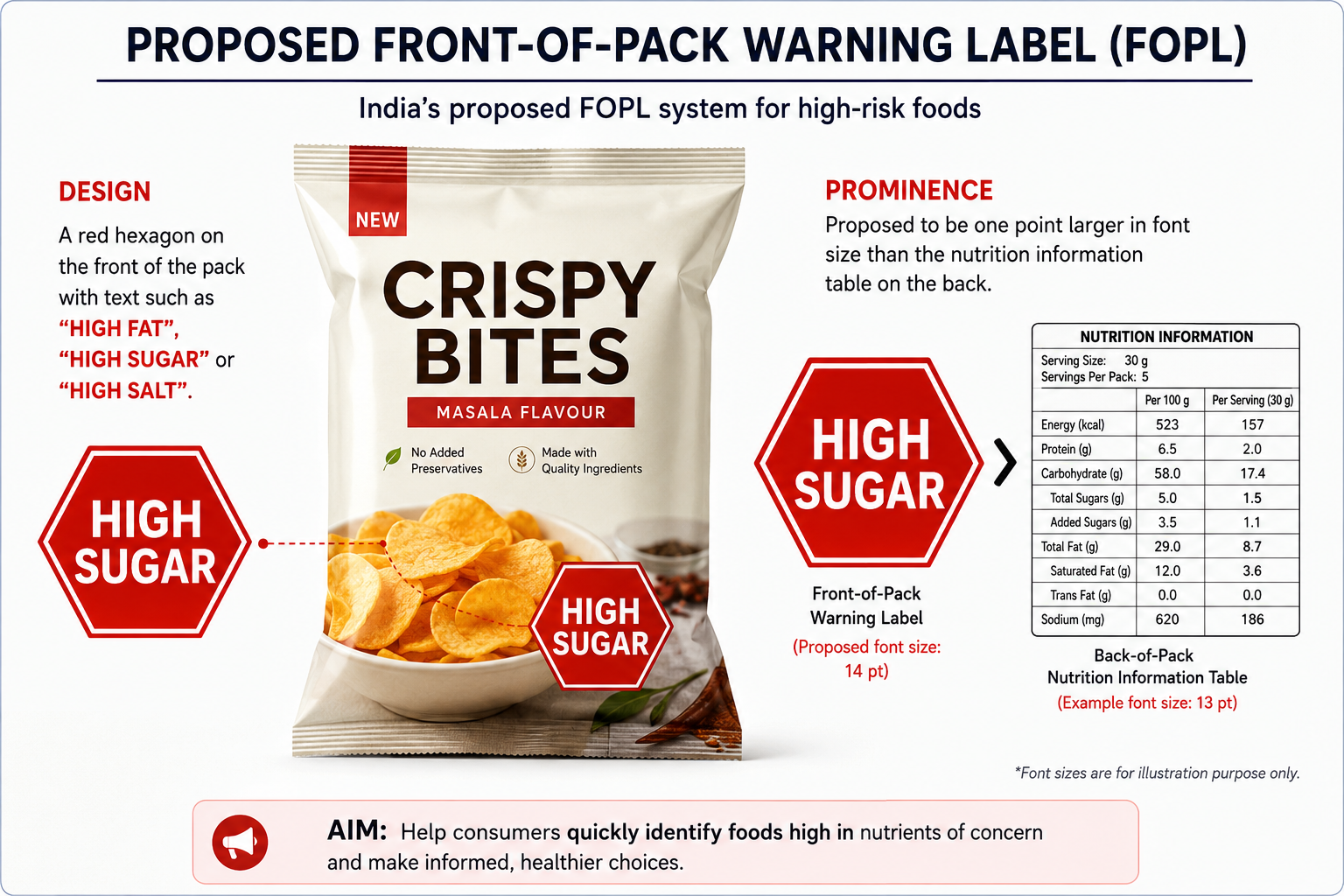
The proposed framework would use prominent red hexagonal warnings to identify products that exceed specified levels of saturated fat, added sugar and salt, along with a separate warning for specified highly sweetened beverages.
For food businesses, FOPL is more than a packaging change. Depending on the final requirements, it could affect product formulation, nutrition calculations, claims, packaging design and product positioning.
What is FOPL in India?
FOPL stands for Front-of-Pack Labelling.
It refers to nutrition information displayed prominently on the front of a packaged food to help consumers identify important nutritional information without having to interpret the detailed nutrition information panel on the back.
What is FSSAI proposing?
The proposed system would place a red hexagonal warning on the front of certain pre-packaged foods.The proposal also covers specified highly sweetened beverages.
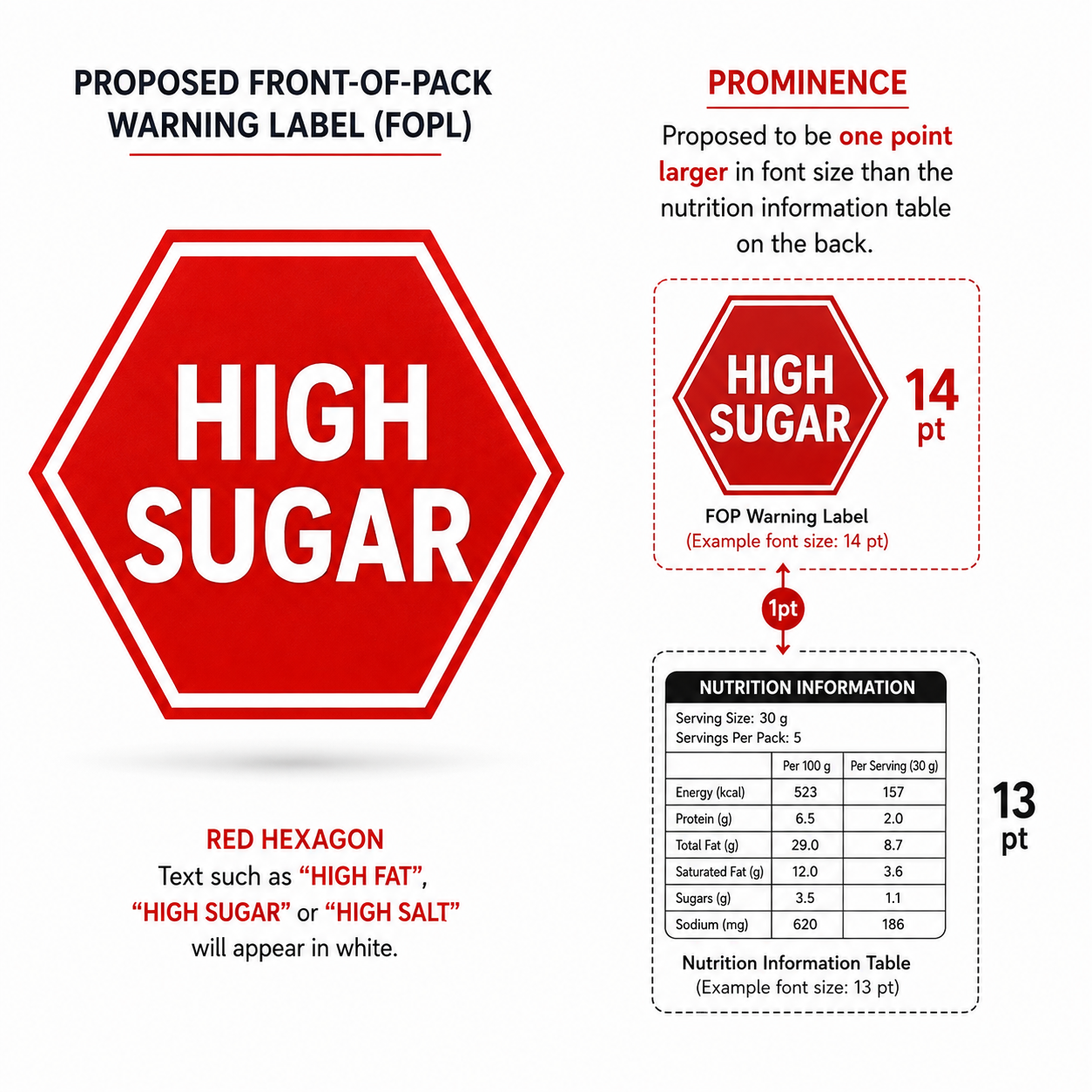
The proposed warning is intended to be prominent. Its font size would be one point larger than the nutrition information table on the back of the pack.
What are the proposed FOPL thresholds?
This is currently one of the biggest questions for food businesses.
The proposed framework links the threshold basis to the Dietary Guidelines for Indians, 2024 (ICMR–NIN). However, the exact FOPL cut-offs are yet to be notified.
That means businesses should be careful about treating numbers circulating online as final FSSAI requirements.
How would Phase I and Phase II work?
The proposal describes a phased approach.
Phase I
Products high in two or more of:
• Saturated fat
• Added sugar
• Salt
Specified highly sweetened beverages would also be covered.
Phase II
The proposed system would then extend to products high in any one of these nutrients.
The dates for implementation of these phases have not yet been finalised.
- Saturated fat
- Added sugar
- Salt
Specified highly sweetened beverages would also be covered.
Which food products could be affected?
FOPL is nutrient-based, not simply category-based. The final nutrient composition and applicable thresholds would determine whether a product is affected.
Potentially affected categories include:
| Category | Examples |
|---|---|
| Beverages | Carbonated drinks, Fruit drinks, Energy and sports drinks, Sweetened tea and coffee |
| Snacks | Chips, Namkeen, Extruded snacks, Popcorn, Crackers |
| Confectionery | Chocolates, Candies, Cream-filled wafers |
| Bakery | Biscuits, Cookies, Cakes, Pastries, Doughnuts |
| Ready-to-eat / Ready-to-cook | Instant noodles, Frozen meals, Processed meats, Sauces and dressings, Breakfast cereals, Dessert mixes |
These are potentially affected categories, not products that will automatically receive warnings.
Are any products proposed to be exempt?
The proposal identifies certain single-ingredient staples for exemption from the FOPL warning.
The final scope and exemptions should be checked once the final requirements are notified.
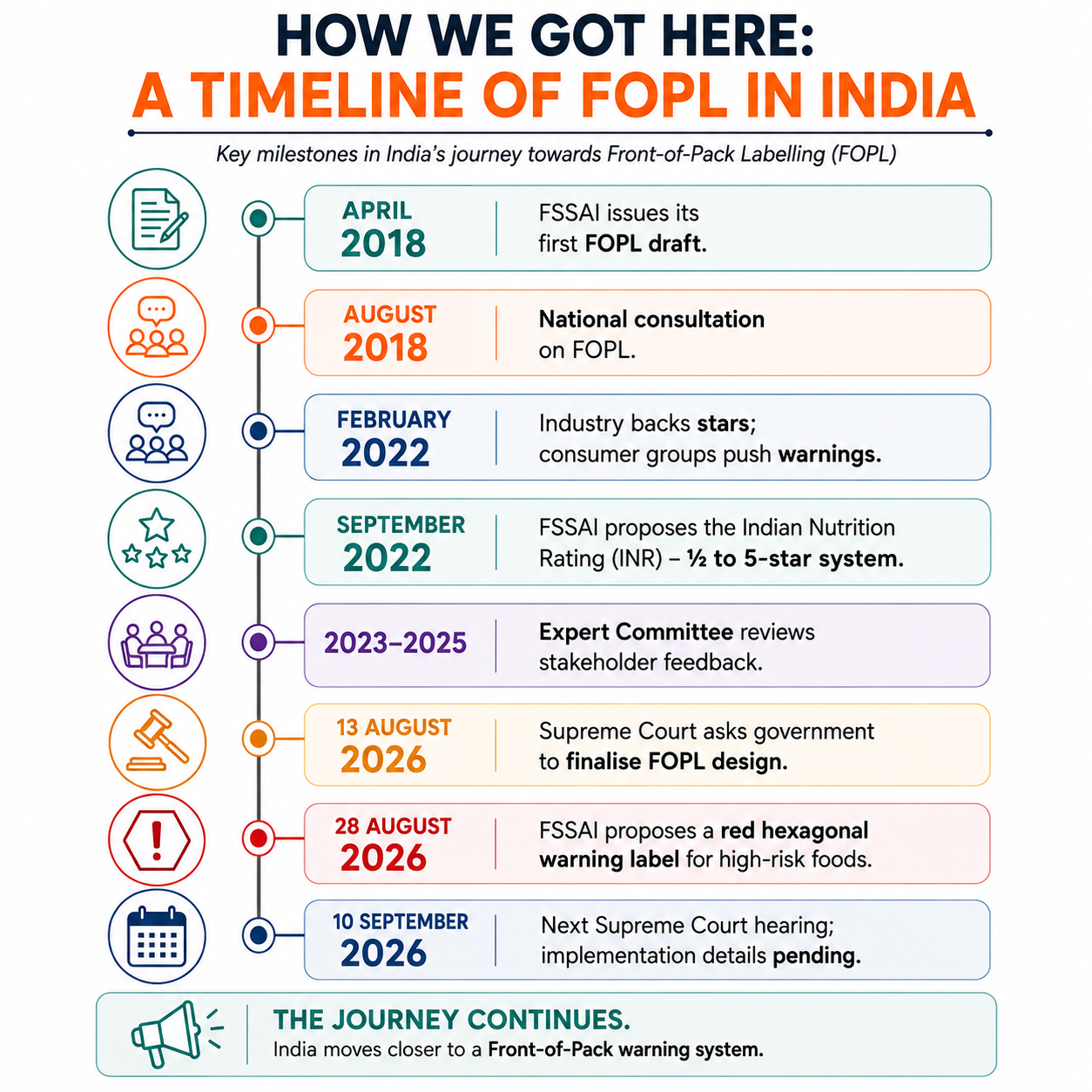
How did India get here?
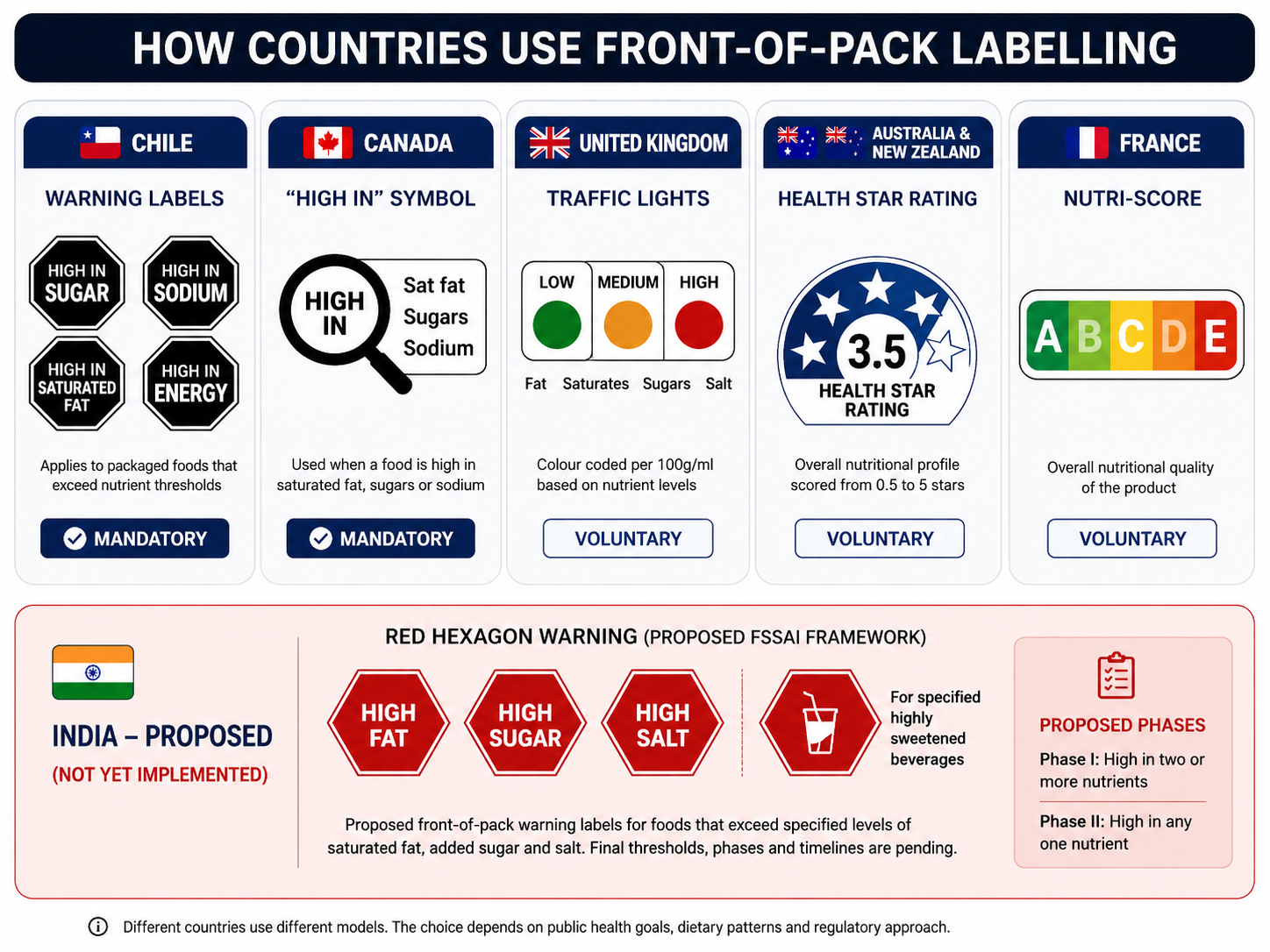
How other countries are handling FOPL declarations?
What should food businesses do now?
There is no need to immediately redesign every pack based on a proposal.
1. Map your SKU portfolio
Create a simple matrix:
| SKU | category | serving size | sugar | saturated fat | salt | claims | packaging |
|---|
2. Identify at-risk products
Look at the actual nutrient profile of each SKU rather than relying on product category or marketing positioning.
3. Model reformulation options
For potentially affected products, assess whether formulation changes could reduce nutrient levels.
But consider sensory properties, shelf life, stability, cost, consumer acceptance and claims before making changes.
4. Review claims
Reassess nutrition and marketing claims against the actual product composition.
5. Review packaging
Assess whether the front panel has sufficient space to accommodate a prominent warning if the final requirements require one.
What about the separate school-food rules?
FSSAI is also working on a separate Safe Food and Balanced Diets for Children in School framework.
The 2026 draft introduces proposed numeric thresholds for foods high in fat, sugar and sodium when sold in and around schools.
This is separate from FOPL .However, for brands selling products into schools, both frameworks could become relevant. A product acceptable in the general market could face additional restrictions in a school environment if it crosses the applicable school-food thresholds.
Need help assessing your products?
Inspeckt Food Solutions helps food businesses assess FSSAI labelling, claims, product categorisation and regulatory risks before packaging and launch.
Talk to Inspeckt Food Solutions →Comments
No comments yet. Be the first to share your thoughts.
Add your thoughts
Contact usPrefer a call with our team? Use Contact us, or leave your email below if you want us to follow up on this comment.