
Can You Sell Homemade Food on Instagram in India? FSSAI Rules Every Home Business Should Know
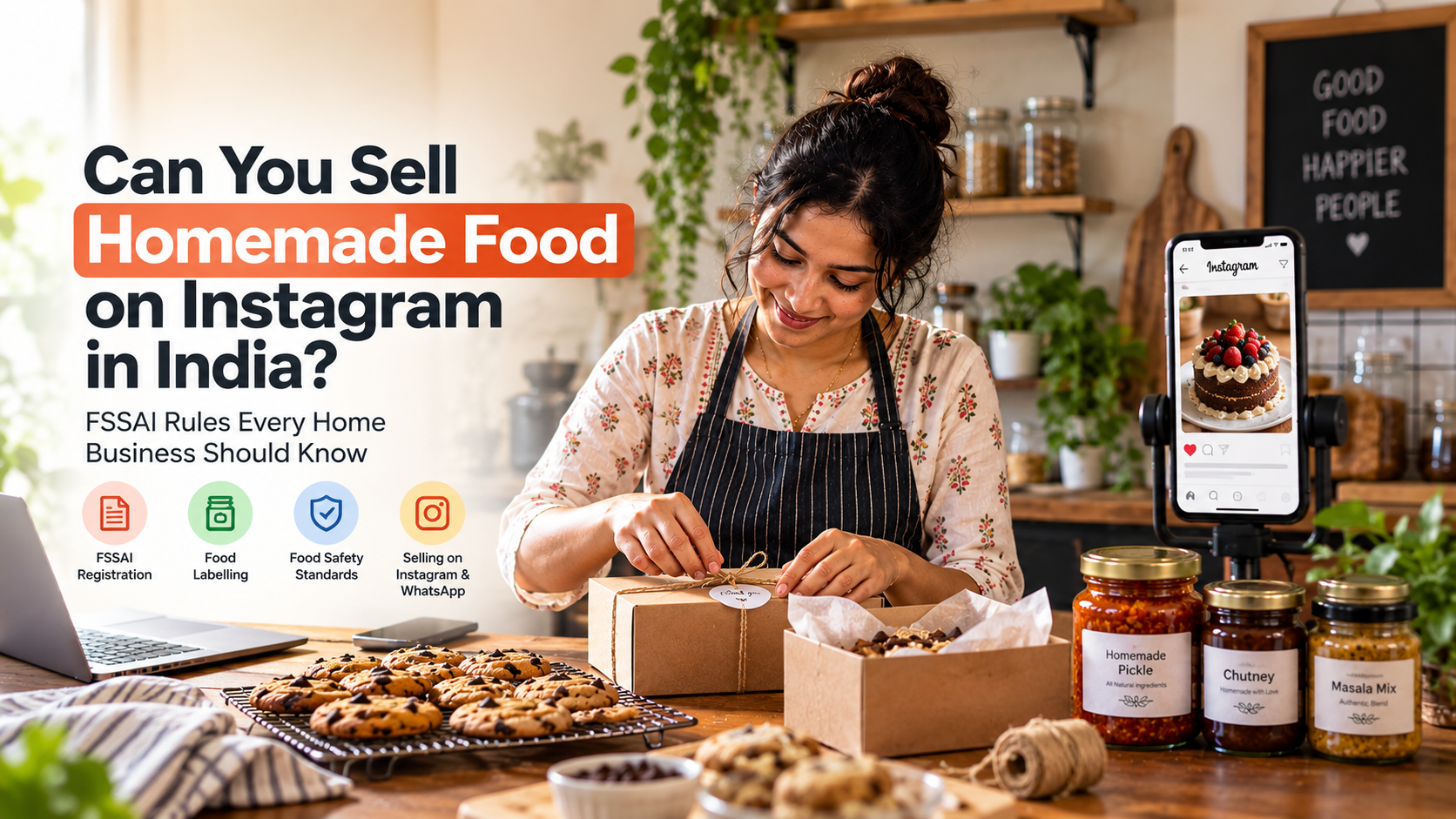
Selling homemade food on Instagram has become an accessible way to start a food business in India. From home bakers and pickle makers to people selling traditional snacks, chocolates and homemade meals, thousands of entrepreneurs are turning their kitchens into small businesses.
The idea sounds simple: prepare something delicious, photograph it, upload it to Instagram, accept orders through WhatsApp and deliver to customers.
But there is one important question many first-time entrepreneurs overlook: Can you legally sell homemade food online without FSSAI registration or a licence?
The short answer is no. If you are operating a food business, even from your home kitchen, you must comply with applicable food safety regulations. Here is what you need to understand before taking your first commercial order.
1. Does a Home-Based Food Business Need FSSAI Registration?
Yes. Operating from a residential kitchen does not automatically exempt you from food safety requirements.
Under Section 31 of the Food Safety and Standards Act, 2006, food business operators must obtain the applicable FSSAI registration or licence before commencing food business activities.
This applies to businesses involved in manufacturing, processing, packaging, storing, distributing and selling food.
For example, if you:
- Sell homemade cakes through Instagram.
- Prepare and sell pickles or chutneys.
- Manufacture packaged snacks from your home.
- Accept orders for homemade chocolates.
- Operate a small home-based meal delivery service.
2. Which FSSAI Registration Do You Need in 2026?
One significant regulatory change came into effect on 1 April 2026.
FSSAI revised its turnover thresholds for food business registration and licensing.
The revised categories are:
| Category | Annual Turnover |
|---|---|
| Basic Registration | Up to ₹1.5 crore |
| State Licence | Above ₹1.5 crore up to ₹50 crore |
| Central Licence | Above ₹50 crore |
These are the revised general turnover thresholds. Your actual eligibility must also be assessed against your food business activity and any applicable category-specific conditions.
For many small home-based food entrepreneurs, FSSAI registration may be the appropriate starting point.
However, do not select a category based on turnover alone. Manufacturing, processing, storage and other business activities can affect the applicable requirements.
You can check your eligibility through the official FoSCoS portal.
3. Does Selling Through Instagram or WhatsApp Change the Rules?
This is where things become interesting.
Many home-based entrepreneurs assume that selling through Instagram or WhatsApp is different from operating a conventional food business.
It isn't.
Your selling channel does not remove your responsibility to obtain the appropriate food business registration or licence.
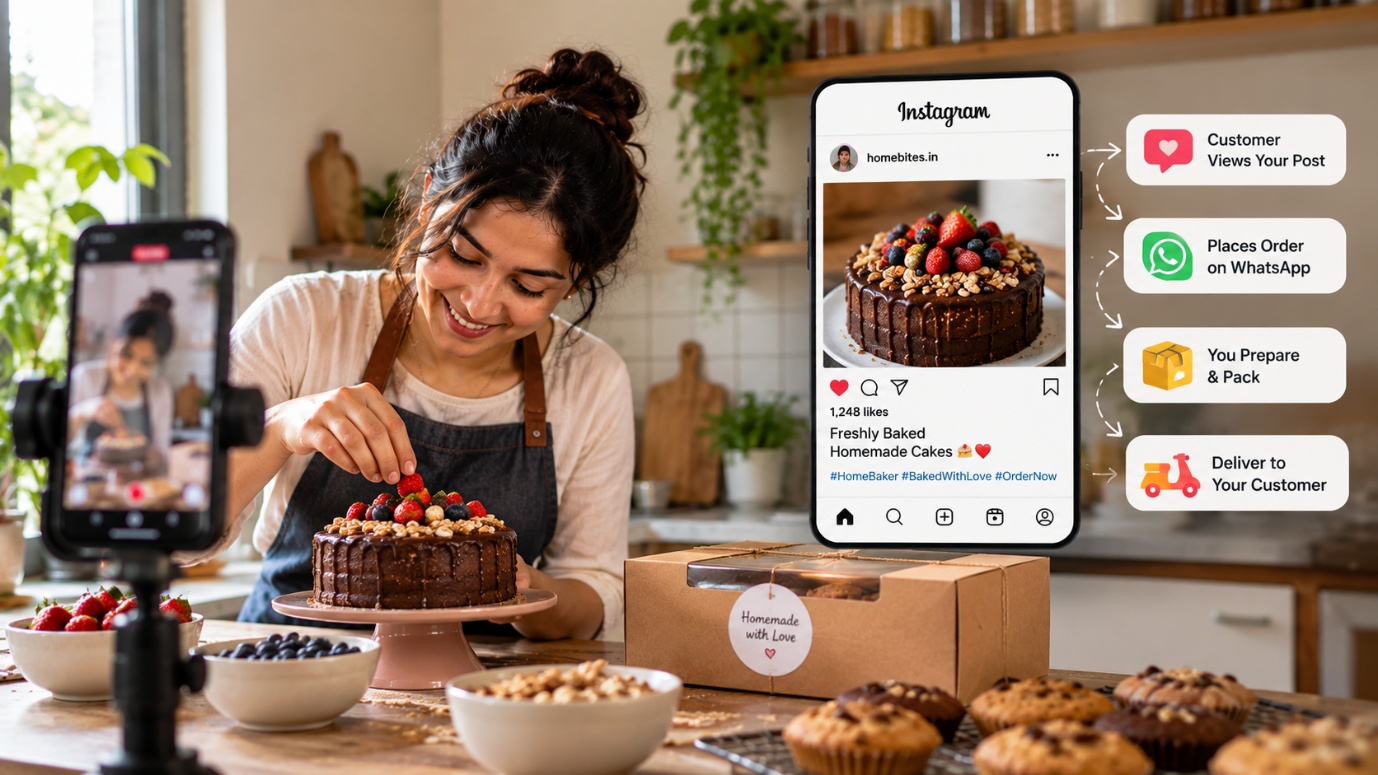
However, there is an important distinction between selling through social media and operating an e-commerce platform.
FSSAI's licensing FAQs specifically address food businesses selling through their own e-commerce platforms. Such businesses may require an additional Central Licence under the e-commerce category.
Whether a particular social media selling arrangement falls under that category depends on the actual business model and activities involved.
Therefore, do not automatically assume that every Instagram seller needs a separate e-commerce licence. Equally, do not assume that using Instagram or WhatsApp removes the need for FSSAI registration.
4. What Documents Should You Prepare?
Before applying, organise your basic business information.
Depending on your business activity and the registration or licence category, you may need:
• Applicant identification and photograph.
• Proof of the food business premises.
• Business constitution details, where applicable.
• Details of the food products you manufacture or sell.
• Information about your food business activities.
• Additional documents required for your selected category.
Your actual home kitchen or production premises should be correctly identified in the application.
Avoid using an unrelated address simply because it is easier to arrange documentation.
The application should accurately represent where your food business operates.
5. FSSAI Registration Is Only the Beginning: What About Food Safety?
Obtaining an FSSAI registration certificate does not automatically make every aspect of your food business compliant.
You also need to maintain appropriate hygiene and food handling practices.
For a home-based food business, pay attention to:
Kitchen hygiene: Keep preparation surfaces, utensils and equipment clean. Maintain a hygienic food preparation environment.
Raw material storage: Store ingredients appropriately and protect them from contamination, moisture and pests.
Personal hygiene: Anyone handling food should follow proper handwashing and hygiene practices.
Food packaging: Use suitable food-grade packaging materials that protect products during storage and transportation.
Product safety: Pay attention to preparation methods, storage conditions and shelf life.
FSSAI's Schedule 4 outlines general hygienic and sanitary practices applicable to different categories of food businesses.
These practices are important whether you are selling ten orders a week or hundreds of products every month.
6. Do You Need FSSAI-Compliant Labels for Homemade Products?
If you sell packaged food, labelling becomes another important compliance consideration.
A homemade pickle sold in a sealed jar, for example, is not simply a homemade recipe anymore. It is a food product being offered commercially.
Depending on the product and applicable labelling requirements, its packaging may need declarations covering:
• Name of the food.
• Ingredient list.
• Nutritional information.
• Allergen declarations.
• Vegetarian or non-vegetarian symbol.
• Net quantity.
• Manufacturer or packer details.
• FSSAI logo and registration or licence number.
• Batch or lot identification.
• Date marking and storage instructions, as applicable.
The exact declarations depend on the product and applicable exemptions.
Do not print hundreds of labels before getting them reviewed. Correcting a packaging error after printing can become an unnecessary expense for a small business.
7. When Should You Take Your Food Business Seriously?
The right time is before you start accepting commercial orders, not after your business becomes popular.
Imagine a home baker who starts with five orders a week. Six months later, the business receives 100 orders every week and begins supplying cafés and retail stores.
The business has changed significantly.
There may now be additional considerations involving production capacity, packaging, shelf-life validation, product testing, supplier management and distribution.
Building the right compliance practices early makes expansion easier and reduces the risk of expensive corrections later.
Frequently Asked Questions
Can I sell homemade cakes on Instagram without FSSAI registration?
A commercial home bakery generally needs the applicable FSSAI registration or licence. Selling through Instagram does not automatically exempt the business.
Can I get FSSAI registration for my home kitchen?
Yes. Home-based food businesses can apply for the appropriate registration or licence using their actual operating premises, subject to applicable eligibility requirements.
What is the FSSAI registration turnover limit in 2026?
The revised general turnover threshold for registration is up to ₹1.5 crore, effective from 1 April 2026. Activity-specific eligibility conditions must also be checked.
Do homemade pickle and snack businesses need FSSAI registration?
Generally, yes. Businesses manufacturing and selling homemade pickles, snacks and similar food products must obtain the applicable FSSAI registration or licence.
Final Thoughts
Starting a food business from home is an exciting opportunity. You do not necessarily need a commercial factory, a large team or substantial investment to begin building a food brand.
But a good recipe and attractive Instagram page are only two parts of the business.
Food safety, appropriate licensing, correct labelling and responsible production practices are equally important.
If you are planning to turn your homemade recipes into a commercial food brand, get your compliance requirements right from the beginning.
Need help getting your food business compliance-ready?
Inspeckt Food Solutions helps food entrepreneurs and businesses navigate FSSAI registration, food labelling, product development and food safety compliance.
Visit Inspeckt to understand how to prepare your food business for its next stage of growth.
Comments
No comments yet. Be the first to share your thoughts.
Add your thoughts
Contact usPrefer a call with our team? Use Contact us, or leave your email below if you want us to follow up on this comment.