
Allergen Management in Restaurants: Beyond the Basics
Allergen Management in Restaurants: Beyond the Basics
Reading Time: 8–10 minutes
Category: Food Safety | Restaurant Operations | Allergen Management
"Does this dish contain peanuts?"
It's one of the simplest questions a customer can ask. Yet, for someone with a food allergy, the answer can be life-changing.
What happened? The peanuts weren't in the recipe. They were transferred through cross-contact from shared equipment, utensils or fryer oil.
💡 Did you know? Unlike bacteria, allergens cannot be destroyed by cooking, freezing, reheating, or microwaving.
Once an allergen is introduced into a food, the only way to eliminate the risk is to prevent cross-contact in the first place.
What Exactly Is a Food Allergy?
A food allergy is an immune system response to a specific food protein. When a person with an allergy consumes even a tiny amount of that food, the immune system reacts as if it were fighting a dangerous threat
| Symptoms |
|---|
| Itching |
| Hives |
| Swelling of lips and throat |
| Difficulty in breathing |
| Anaphyxis |
Food Allergy vs Food Intolerance
| Food Allergy | Food Intolerance |
|---|---|
| Immune system response | Digestive response |
| Can be life-threatening | Usually mild discomfort |
| Tiny amounts may trigger a reaction | Symptoms depend on quantity |
👀 Inspector's Tip: Never dismiss an allergy request by saying "It's only a little."
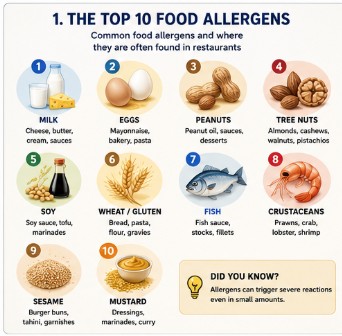
The Most Common Food Allergens
The Biggest Risk Isn't the Ingredient: It's Cross-Contact
One of the most dangerous misconceptions is:
"The allergen isn't in the recipe, so the dish is safe."
Not necessarily.
Cross-contact occurs when an allergen unintentionally transfers from one food or surface to another.
| Shared chopping boards |
| Shared fryer oil |
| Shared knives or spatulas |
| Using the same gloves between tasks |
| Improper storage practices |
Unlike bacterial contamination, you cannot see, smell, or taste allergen cross-contact.
Allergen Management Starts Before Service
Many restaurants focus on what happens in the kitchen. In reality, allergen management begins much earlier.
The Five Pillars of Allergen Management
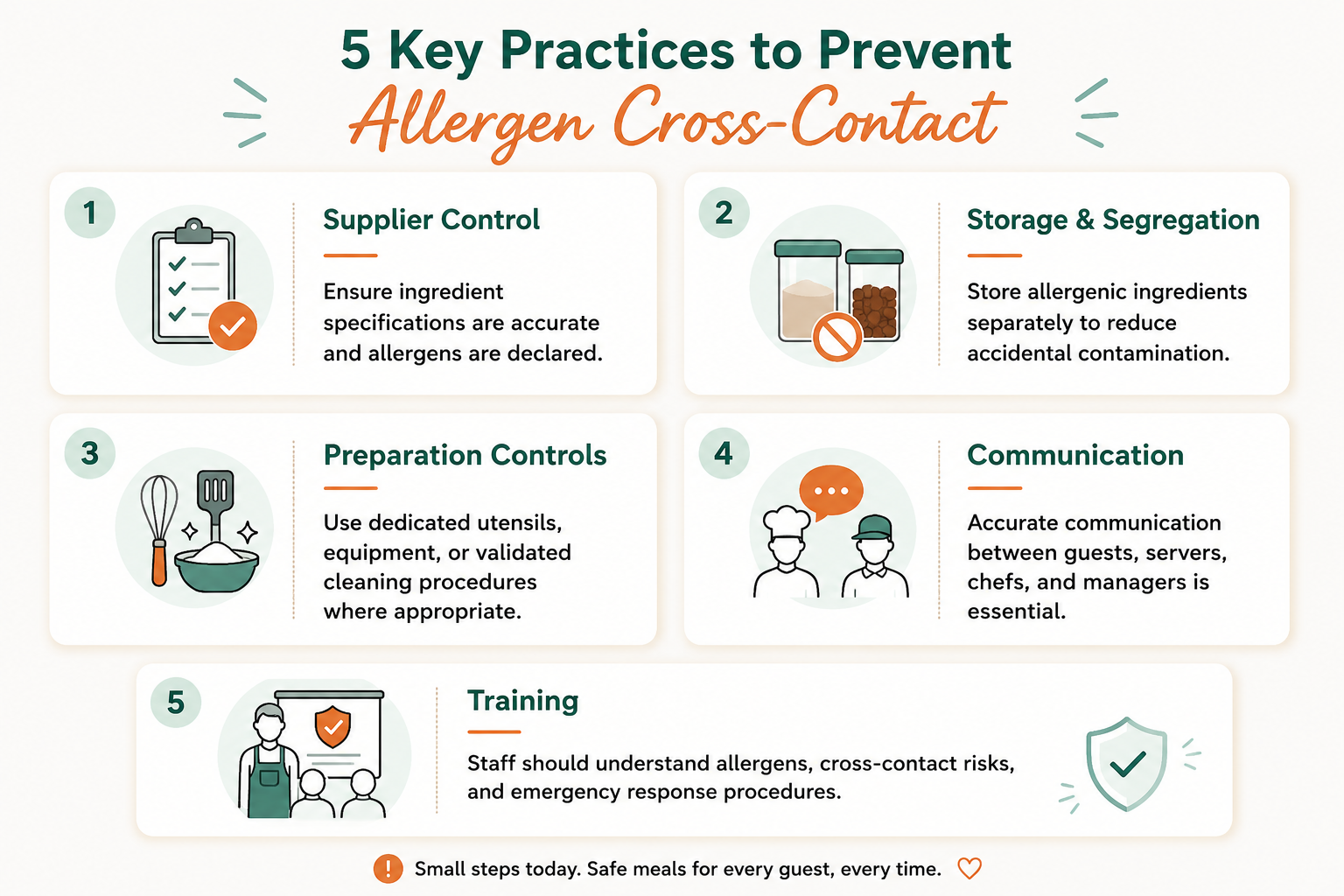
Consistent allergen cross-contact control in restaurants is essential to protect guests with food allergies, ensure safety, and build customer trust.
Talk to our regulatory expert
Comments
No comments yet. Be the first to share your thoughts.
Add your thoughts
Contact usPrefer a call with our team? Use Contact us, or leave your email below if you want us to follow up on this comment.